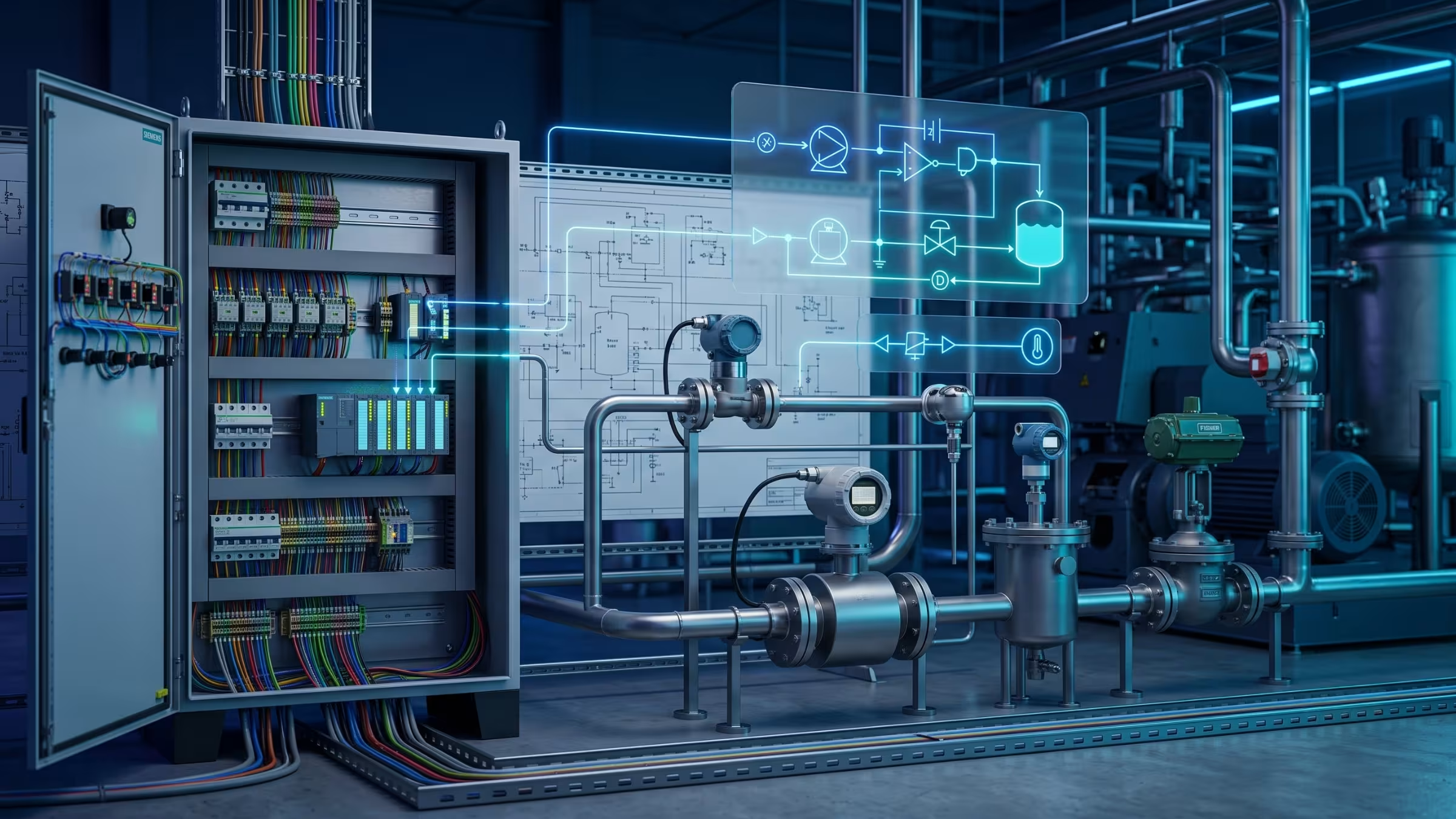
Instrumentation and electrical (I&E) services cover the design, installation, calibration, and maintenance of the field devices, wiring, and control systems that keep an industrial process running. In Louisiana, that means everything from a transmitter loop on a refinery unit to the switchgear feeding a water treatment plant, delivered by licensed electricians and instrument technicians who know the state’s codes and its weather.
Your process trips at 2 a.m., and the operator on shift cannot tell if it is a bad sensor, a loose terminal, or a PLC fault. That is the moment instrumentation and electrical (I&E) services either save your weekend or cost you a full shutdown. We have stood in that control room more times than we can count, and the difference always comes down to how well the I&E work was engineered, installed, and maintained in the first place.
We are the Advanced Energy Services technical team, and we have spent 15-plus years building, calibrating, and troubleshooting I&E systems across Louisiana’s oil and gas, petrochemical, manufacturing, and municipal markets. We have pulled cable through Gulf Coast humidity, chased ground faults after a hurricane knocked out a substation, and requalified loops for a turnaround with a hard startup date.
In this guide, you will learn exactly what I&E services include, which industries rely on them, what the work typically costs in Louisiana, and how to choose a contractor who will show up qualified, licensed, and ready when your plant needs them most.
What Are Instrumentation & Electrical (I&E) Services?
Key Takeaways
- I&E combines two licensed trades, instrumentation and electrical, into one coordinated scope, so field devices and power systems get engineered together.
- The work spans the full asset lifecycle: design, installation, calibration, startup, and ongoing maintenance.
- I&E is the physical layer under every automation system. Without it, a PLC or DCS has nothing reliable to read or control.
Definition & Why I&E Matters for Industrial Facilities
Instrumentation and electrical (I&E) services are the combined engineering, installation, and maintenance work on the sensors, control devices, wiring, and power distribution equipment that a plant depends on to run and run safely.
The instrumentation side covers devices that measure or control a process: pressure transmitters, level switches, flow meters, control valves, and analyzers. The electrical side covers the power that runs everything else: motor control centers, switchgear, panels, conduit, and grounding systems.
Here is why the pairing matters. A perfectly calibrated transmitter is useless if the power feeding it is unstable. A well-built electrical system cannot protect a process if the instruments reporting on that process are drifting out of tolerance. I&E works because it treats these two trades as one scope, not two separate vendors who never talk to each other.
For a Louisiana plant manager, this matters at a practical level. A single I&E contractor who understands both disciplines can catch a wiring problem that looks like an instrument fault, or an instrument fault that looks like a power problem, faster than two contractors working in isolation. That difference alone can cut hours off a troubleshooting call.
The Role of I&E in Process Automation
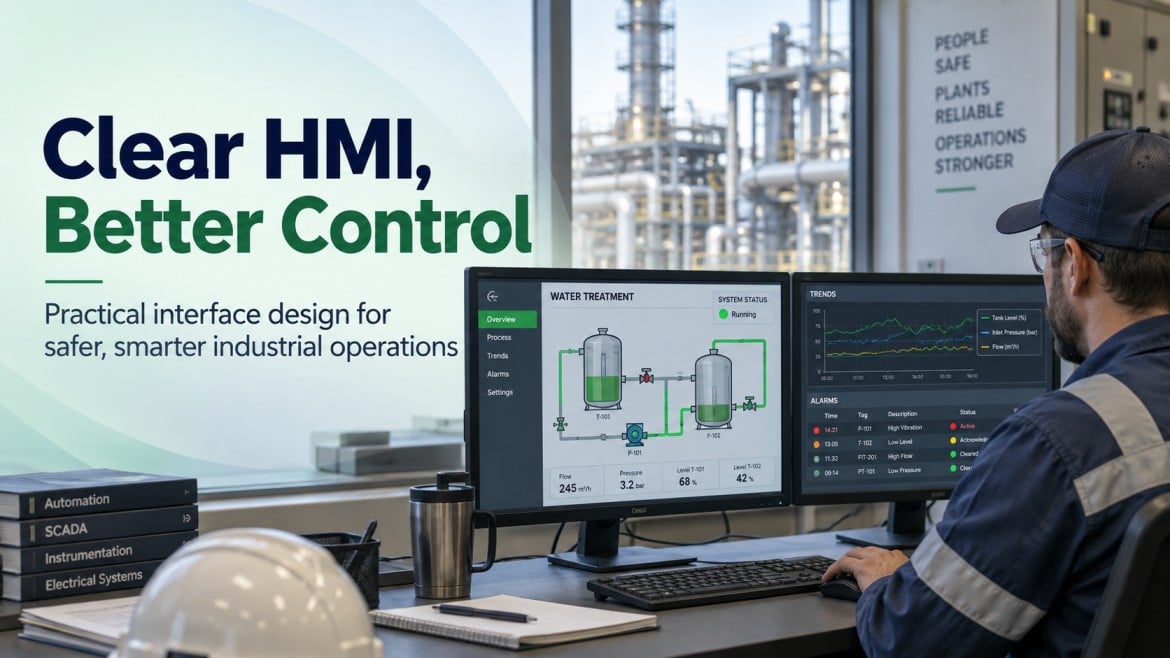
I&E is the physical foundation that process automation sits on. Every PLC, DCS, or SCADA system depends on field instruments and electrical infrastructure to sense the process and actuate control. Without solid I&E work, even the best-programmed control system is only as good as the wiring and devices feeding it data.
This guide focuses on the instrumentation and electrical scope itself: the devices, the wiring, the calibration, and the compliance work. For a deeper look at PLC, DCS, and SIS architecture, see our dedicated SCADA and automation resources, where we walk through control system design in detail.
Industries Served Across Louisiana
Key Takeaways
- Oil, gas, and petrochemical facilities carry the strictest I&E requirements because of hazardous area classification and process safety rules.
- Manufacturing and power generation plants lean on I&E for uptime and energy efficiency, not just safety compliance.
- Marine, offshore, and water/wastewater sites bring their own challenges: corrosion, remote access, and public health obligations.
Oil & Gas, Petrochemical & LNG Facilities
Louisiana’s oil and gas corridor along the Mississippi River and the LNG terminals near Lake Charles and Cameron Parish run some of the most demanding I&E work in the country. These sites require hazardous area-rated equipment, explosion-proof enclosures, and instrument loops tied directly into safety instrumented systems. A single miscalibrated pressure transmitter on a process safety loop is not a minor issue. It is a potential process safety event under OSHA 1910.119, the Process Safety Management standard.
We have worked turnarounds at refineries and gas processing plants where the entire schedule hinged on how fast the I&E crew could complete loop checks before startup. Petrochemical plants also tend to run older instrumentation alongside newer smart transmitters, which means a technician needs to be comfortable troubleshooting a 20-year-old analog loop and a modern HART device on the same shift.
Manufacturing, Utilities & Power Generation
Manufacturing plants and power generation facilities across Louisiana depend on I&E work for a different reason: uptime and efficiency, not just hazard mitigation. A motor control center failure at a paper mill or a chemical batch plant can shut down an entire line. Utilities running substations and generation assets need electrical infrastructure that holds up through storm season without tripping unnecessarily.
In these facilities, we see a heavier focus on preventive maintenance schedules, thermal imaging of electrical panels, and control loop tuning to squeeze out energy savings. The regulatory bar is generally lower than in a Class I hazardous area, but the financial stakes on downtime are just as real.
Marine/Offshore & Water/Wastewater
Offshore platforms and marine terminals along the Louisiana coast bring corrosion, salt air, and remote access into the equation. Instrumentation out here has to survive conditions that would eat through standard enclosures within a couple of years, so marine-grade materials and coatings are not optional.
Water and wastewater treatment plants operate under a different pressure: public health. A flow meter or chlorine analyzer that drifts out of calibration is not just an operational headache; it is a compliance risk with LDEQ. These facilities also tend to run older SCADA infrastructure that our team has retrofitted rather than replaced outright, to stretch capital budgets while still improving reliability.
Complete Instrumentation & Electrical Services
Key Takeaways
- I&E scope runs from FEED and detailed engineering all the way through turnaround and emergency support.
- Calibration is not a one-time task. It is a recurring discipline tied to instrument drift and regulatory requirements.
- Commissioning steps like FAT, SAT, and loop checks catch problems before they become startup delays.
Engineering & System Design (FEED, Detailed Engineering)
Every solid I&E project starts with engineering. Front-end engineering design (FEED) defines the scope, instrument index, and control philosophy before a single conduit gets bent. Detailed engineering then produces the loop diagrams, wiring schedules, panel layouts, and hazardous area drawings that a construction crew builds from.
Skipping or rushing this step is one of the most common causes of costly field rework we see. A wiring schedule with the wrong terminal assignment might look minor on paper, but on a 200-loop project, it can add days of troubleshooting once installation is underway.
Electrical Construction & Instrument Installation
This is the hands-on phase: pulling cable, terminating instruments, mounting panels, setting conduit, and installing switchgear and motor control centers. On Louisiana job sites, this work has to follow the National Electrical Code (NEC), Article 500 rules for hazardous locations wherever the site classification calls for it.
Field crews building instrument loops typically handle:
- Transmitter and sensor mounting with proper impulse tubing and heat tracing where freeze protection matters
- Cable pulling and termination following approved wiring schedules
- Conduit and tray installation rated for the area classification
- Panel and enclosure installation, including junction boxes and marshalling cabinets
- Grounding and bonding to protect both equipment and personnel
Calibration Services
Calibration means adjusting an instrument so its output accurately matches a known reference standard. Every transmitter, gauge, and analyzer drifts over time due to vibration, temperature swings, and normal wear. Left unchecked, that drift shows up as bad process data long before anyone notices.
We calibrate pressure, level, flow, and temperature instruments against traceable reference standards, then document the as-found and as-left readings for the plant’s records. On safety instrumented systems, this documentation is not optional paperwork. It supports the functional safety verification required under IEC 61511.
Commissioning, Startup & Operational Readiness (FAT, SAT, Loop Checks)
Before a new or modified system goes live, it needs to prove itself. Factory Acceptance Testing (FAT) verifies panels and control systems at the vendor’s shop, before shipment. Site Acceptance Testing (SAT) repeats that verification once equipment is installed and powered on site. Loop checks confirm that every instrument signal traces correctly from the field device to the control system display and back.
Skipping loop checks to save a day almost never saves time in the end. We have seen plants push through a startup without full loop verification, only to spend the first week of operation chasing signal problems that a two-hour check would have caught.
Turnarounds, Shutdown Support & Emergency Services
Turnarounds compress months of maintenance into a fixed window, and I&E work is almost always on the critical path. Our crews scale up for shutdown support, working alongside the mechanical trades to hit a hard startup date. If your facility also needs pump, valve, or rotating equipment work during that window, our mechanical services team coordinates directly with I&E crews so that both trades do not trip over each other on the schedule.
Outside of planned work, emergencies do not wait for business hours. A tripped breaker on a Saturday or a failed transmitter during a hurricane restoration effort needs a crew that can mobilize fast and diagnose the right problem the first time.
I&E Integration with Automation Systems
How I&E Connects Field Devices to Control Systems
Field instruments send their signals, whether 4-20mA, HART, or a digital fieldbus protocol, back to a marshalling cabinet, then into an I/O card on a PLC or DCS. The I&E scope covers everything up to and including that termination point, while the programming and logic that interpret the signal sit on the automation side.
A surprising number of control system complaints trace back to I&E issues: a corroded terminal, a bad ground causing signal noise, or a transmitter drifting out of calibration. Getting the wiring, grounding, and calibration right up front eliminates a large share of the nuisance alarms operators deal with every shift. For a full breakdown of PLC, DCS, and safety instrumented system architecture, our SCADA services content covers that ground in depth.
Instrumentation Equipment We Work With
Sensors, Transmitters & Control Valves
The instruments doing the actual measuring are where most calibration and troubleshooting time goes. On Louisiana job sites, we regularly work with:
- Pressure and differential pressure transmitters (common brands include Rosemount and Endress+Hauser)
- Level instruments, including radar, guided wave radar, and ultrasonic devices
- Flow meters, from magnetic and Coriolis meters to orifice-plate DP flow
- Temperature transmitters and RTDs/thermocouples
- Control valves and positioners, where mechanical wear and air supply issues cause a large share of field problems
A control valve that will not respond correctly is a good example of why I&E cross-training matters. The problem could be a bad positioner signal, a mechanical binding issue, or a supply air problem, and diagnosing it fast depends on ruling each of those out in the right order.
Electrical Infrastructure (Panels, Switchgear, Transformers)
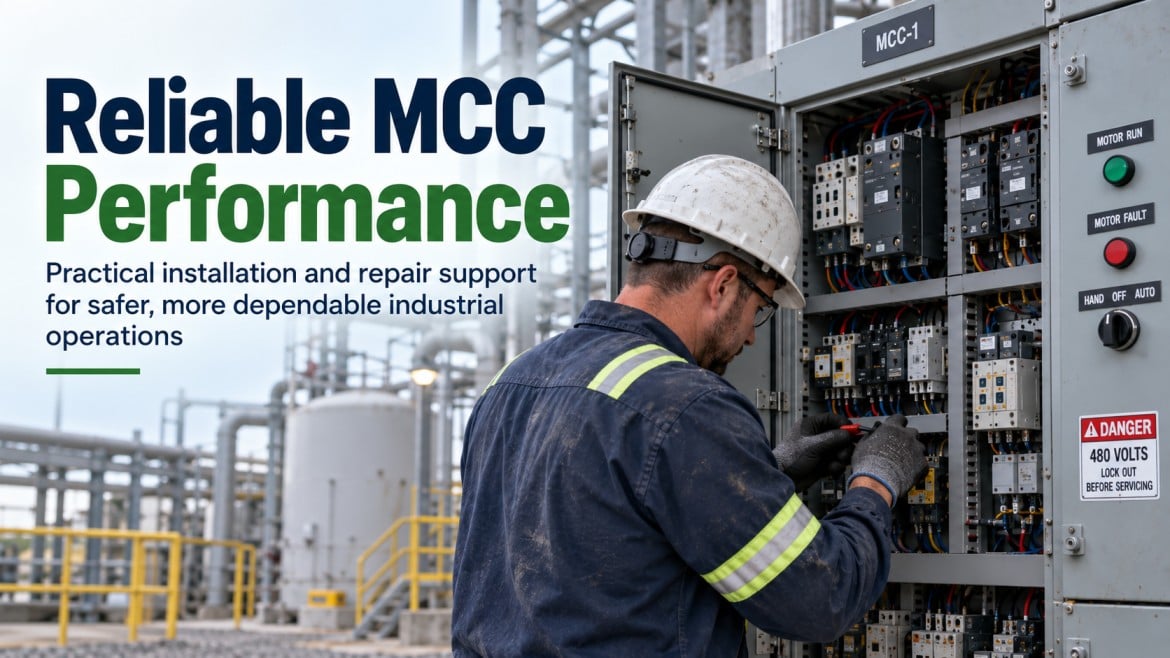
On the electrical side, our scope includes distribution panels, motor control centers, switchgear, and transformers that feed instrumentation and process equipment. This guide focuses on how that infrastructure integrates with instrumentation work. If you are sourcing specific parts, components, or replacement equipment, our parts and sales resources cover product selection in more detail.
Field Instrumentation Communication Protocols
HART Protocol
HART (Highway Addressable Remote Transducer) protocol layers digital communication on top of a standard 4-20mA analog signal. This means an existing analog loop can carry extra diagnostic data, like device status and configuration, without adding new wiring. That is exactly why HART is still the most common protocol we run into on older Louisiana refinery and chemical plant instrumentation.
The practical benefit shows up during troubleshooting. A HART communicator lets a technician pull diagnostic data directly from a transmitter in the field, which often identifies a sensor fault or configuration issue without pulling the device for bench testing.
PROFIBUS & FOUNDATION Fieldbus
PROFIBUS and FOUNDATION Fieldbus are digital bus protocols that let multiple instruments share a single communication line back to the control system, instead of running separate home-run wiring for each device. This cuts material and labor costs significantly on new construction, and it moves more diagnostic intelligence out to the field.
The tradeoff is complexity. A fieldbus segment fault can take down multiple instruments at once instead of just one, so proper segment design and termination matter more than they do on a simple point-to-point 4-20mA loop.
| Protocol | Signal Type | Best Fit |
|---|---|---|
| HART | Analog 4-20mA + digital overlay | Retrofits and legacy loops needing diagnostics without rewiring |
| PROFIBUS | Fully digital bus | New builds where multiple devices share one segment |
| FOUNDATION Fieldbus | Fully digital bus | Process control applications needing device-level function blocks |
System Modernization & Retrofit Services
Legacy PLC Migration & Control System Upgrades
Plenty of Louisiana facilities are still running PLCs and DCS platforms that manufacturers no longer support. That is not automatically a crisis, but it does create risk: no more replacement parts, no more software patches, and a shrinking pool of technicians who know the old platform.
We approach migrations in phases wherever the process allows it, mapping the existing logic first, then cutting over in planned windows instead of one all-at-once event. This reduces the chance of an extended unplanned outage caused by an unexpected logic gap between the old and new systems.
Electrical Infrastructure Improvements
Aging switchgear, undersized conduit, and outdated grounding systems create risk long before they cause a visible failure. Infrastructure improvements, arc flash studies, breaker replacements, and panel upgrades often deliver a better safety and reliability return than a full electrical system rebuild, especially on a facility working with a defined capital budget.
Troubleshooting & Diagnostic Services
Calibration Issues & Electrical Faults
When a reading looks wrong, is the instrument actually out of calibration, or is something upstream causing bad power to the device? We start every diagnostic call by ruling out the electrical side first: loose terminals, corroded connections, and grounding issues cause far more field problems than a genuinely failed instrument.
Common failure modes we see repeatedly include moisture intrusion in junction boxes, terminal corrosion from Gulf Coast humidity, and drift in older analog transmitters that were never on a scheduled recalibration plan.
PLC Failures & Network Communication Problems
A PLC that appears to have failed is, more often than not, actually experiencing a communication network issue: a bad cable segment, an IP conflict, or a failed switch port. Replacing a PLC that was never actually broken wastes budget and does not fix the underlying problem.
Our approach isolates the network layer first, checking cable integrity and switch diagnostics, before assuming the controller itself needs replacement.
Control Loop Instability
A process that hunts, oscillates, or overshoots its setpoint is usually a tuning problem, not a hardware failure. That said, ruling out a sticky control valve or a noisy transmitter signal has to happen before touching the PID tuning parameters, or the fix will not hold.
This is where I&E and controls expertise overlap the most. Diagnosing loop instability correctly requires understanding both the mechanical behavior of the valve and the electrical signal feeding the controller.
Safety, Licensing & Regulatory Compliance
LSLBC, OSHA & NFPA 70/70E
Electrical contracting work in Louisiana requires licensing through the Louisiana State Licensing Board for Contractors (LSLBC). Beyond licensing, day-to-day safety on energized equipment follows NFPA 70 (the National Electrical Code) for installation standards and NFPA 70E for electrical safety work practices, including arc flash risk assessment and PPE selection.
This is not a box-checking exercise. According to OSHA’s guidance on arc flash hazards, even low-voltage circuits can produce enough energy to cause serious burns, and workplace data cited in OSHA’s own arc flash training materials points to roughly 56% of reported electrical injuries in 2020 coming from direct exposure to electricity, split between shock and arc-related burns. That is exactly why our crews follow lockout/tagout and arc flash boundary procedures on every energized task, not just the ones that look obviously dangerous.
ISA Standards & IEC 61511 Functional Safety
Process safety instrumented systems, the loops designed to shut a process down safely before it becomes a hazard, follow IEC 61511 functional safety requirements alongside relevant ISA standards. This governs everything from how a safety instrumented function is specified to how often it must be proof-tested.
We flag any specific safety integrity level (SIL) requirement or proof-test interval to the facility’s process safety engineer rather than assuming a standard interval applies. Every plant’s safety requirements specification is different, and getting this wrong is not a place to guess.
Hazardous Area Compliance (Class I Div 1/2) & Offshore Requirements
Hazardous area classification determines what equipment can legally be installed in a given zone. Class I Division 1 areas have flammable gases or vapors present under normal operating conditions, requiring explosion-proof or intrinsically safe equipment. Class I Division 2 areas only have those hazards present under abnormal conditions, which allows somewhat more flexibility in equipment selection.
Offshore facilities add another layer: Coast Guard and BSEE requirements on top of the standard hazardous area rules. Getting the classification wrong is not a paperwork problem. It is the kind of mistake that turns a maintenance job into an incident investigation.
Reliability & Maintenance Strategies
Preventive & Predictive Maintenance
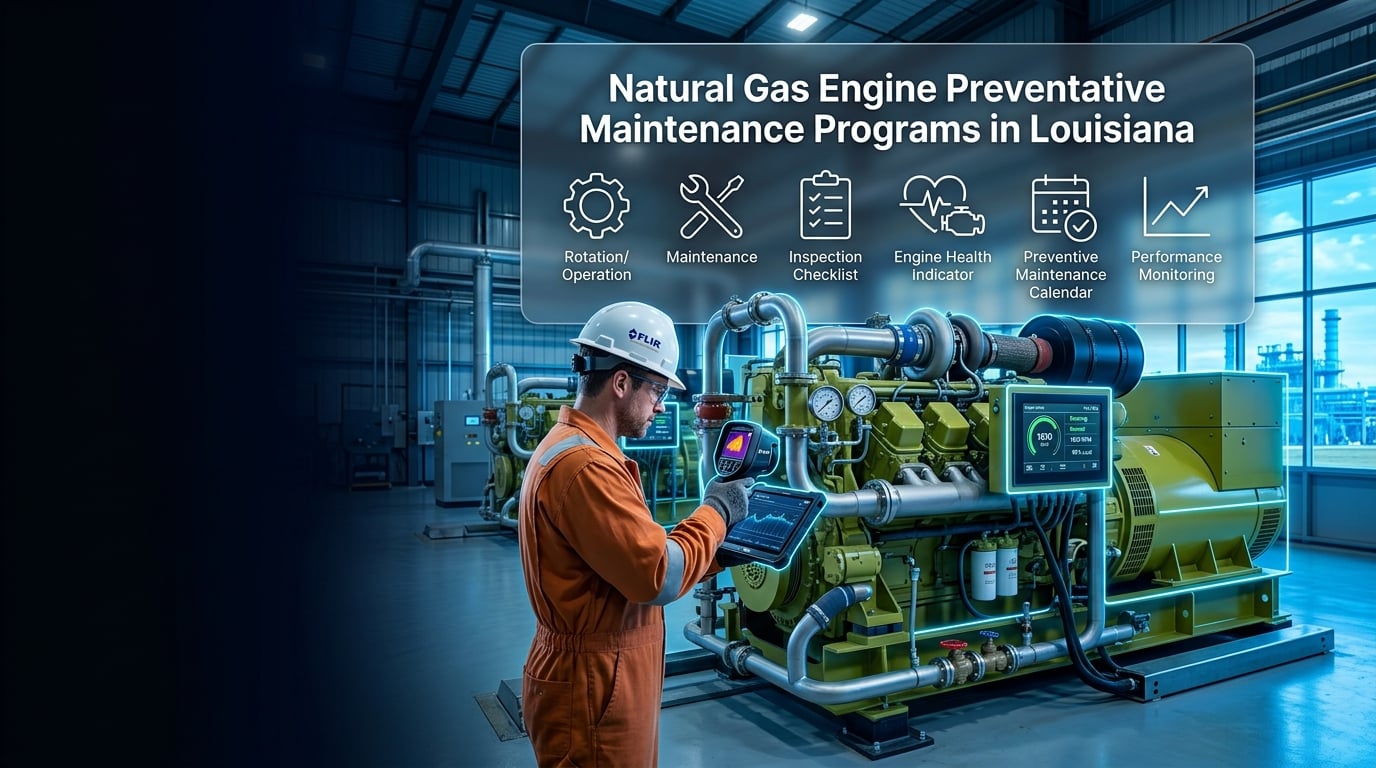
Preventive maintenance follows a fixed schedule: calibrate this transmitter every six months, replace this breaker every ten years, regardless of actual condition. Predictive maintenance instead uses condition monitoring, vibration data, thermal imaging, and trend analysis to catch a failure before it happens and schedule the fix on your terms instead of the equipment’s terms.
According to Deloitte’s research on predictive maintenance, unplanned downtime costs the U.S. industry an estimated $50 billion annually, and industry studies consistently show predictive programs cutting unplanned downtime by 30 to 50% once fully deployed. We do not recommend ripping out a working preventive schedule overnight. Most Louisiana plants get the best return from a hybrid approach: predictive monitoring on the assets where failure is expensive, preventive schedules everywhere else.
Reliability-Centered Maintenance (RCM) & Asset Lifecycle Management
Reliability-centered maintenance (RCM) asks a simple question for every asset: what happens if this fails, and how much does that failure actually cost? A backup pump that has a redundant spare does not need the same maintenance urgency as a single transmitter guarding a safety interlock.
Asset lifecycle management extends that thinking across the full life of the equipment, from installation through eventual replacement, so capital planning is based on real condition data instead of guesswork about how many years a device has left.
Typical Cost of I&E Services in Louisiana
Factors Affecting Pricing
Several factors move I&E project costs up or down in Louisiana:
- Hazardous area classification: Class I Division 1 work requires more expensive equipment and slower, more careful installation than a standard unclassified area
- Scope size: A single instrument calibration costs far less per unit than a full plant-wide loop check
- Urgency: scheduled work during a planned outage costs less than an emergency mobilization
- Site access: offshore or remote well site work carries higher mobilization costs than an in-town facility
- Documentation requirements: Process safety loops requiring full IEC 61511 documentation take more technician time than a non-critical loop
Installation, Maintenance & Emergency Service Costs
The table below reflects general industry ranges for Louisiana industrial I&E work. Treat these as a starting point. Your actual quote depends on site conditions, hazardous area classification, and current scope.
| Service Type | Typical Louisiana Range |
|---|---|
| Single instrument calibration | $150 to $400 per device |
| New instrument loop installation | $1,500 to $6,000 per loop, depending on hazardous area rating |
| Scheduled preventive maintenance contract | Varies by asset count; typically billed as an annual service agreement |
| Emergency/after-hours service call | Premium labor rate, often 1.5 to 2x standard scheduled rate |
| Turnaround/shutdown support | Project-based, scoped against the outage schedule |
This is exactly why a solid preventive maintenance plan tends to pay for itself. Every hour spent on scheduled calibration is an hour not spent paying an emergency rate to fix the same instrument after it fails during production.
How to Choose the Right I&E Contractor in Louisiana
Licensing, Certifications & Safety Performance
Start with the basics. A qualified Louisiana I&E contractor should be able to show:
- Active LSLBC electrical contractor license
- Current OSHA 10/30 and NFPA 70E training records for field technicians
- A documented safety program with a real incident rate, not just a stated policy
- Evidence of hazardous area installation experience, not just standard commercial electrical work
- Insurance and bonding appropriate for industrial-scale project risk
Do not be shy about asking a contractor to walk through their safety record directly. A contractor confident in their performance will share it without hesitation.
Industrial Experience & Emergency Response
General commercial electrical experience does not automatically transfer to industrial I&E work. Ask specifically about experience in your industry: refinery turnarounds, water treatment SCADA, marine terminal instrumentation, whatever matches your facility.
Then ask about emergency response in concrete terms. What is the actual average mobilization time for an after-hours call? Is there a dedicated on-call rotation, or does an emergency call just get queued behind scheduled work? These answers tell you more than any marketing brochure.
Louisiana Service Areas
Cities We Serve
Advanced Energy Services provides instrumentation and electrical services across Louisiana’s key industrial regions, including:
- Baton Rouge, the heart of the state’s petrochemical corridor
- Lake Charles, home to major LNG and refining infrastructure
- Lafayette, a hub for oil and gas support services
- New Orleans, including the marine terminal and port-adjacent facilities
- Shreveport, serving north Louisiana industrial and manufacturing sites
- Monroe, covering northeast Louisiana facilities
- Houma is close to offshore support and marine operations
- Alexandria, serving central Louisiana industrial clients
If your facility sits outside these areas, reach out through our main site to confirm coverage. We regularly extend service to nearby parishes depending on project scope.
Frequently Asked Questions
What is the difference between instrumentation and electrical services?
Instrumentation covers the devices that measure and control a process, like transmitters and control valves. Electrical covers the power systems that run the plant, like panels, switchgear, and motor control centers. I&E combines both into one coordinated scope.
How often should industrial instruments be calibrated?
It depends on the instrument’s criticality and drift history. Safety-critical loops often follow a schedule set by the plant’s process safety requirements, while general process instruments are commonly checked every 6 to 12 months. Your specific interval should come from your process safety engineer or instrument index.
What licensing does an I&E contractor need in Louisiana?
Electrical contracting work requires an active license through the Louisiana State Licensing Board for Contractors (LSLBC). Technicians working on hazardous areas or process safety equipment should also carry current OSHA and NFPA 70E safety training.
Can I&E services help reduce unplanned downtime?
Yes. Calibration drift, loose terminations, and aging electrical infrastructure are common causes of unplanned trips. A scheduled I&E maintenance program, paired with predictive monitoring on critical assets, catches most of these issues before they cause a shutdown.
Do I&E contractors work in hazardous (classified) areas?
A qualified I&E contractor should have documented experience installing and maintaining equipment in Class I Division 1 and Division 2 areas, using explosion-proof or intrinsically safe equipment rated for that classification.
What should I expect during a turnaround or shutdown?
Expect a scoped work list tied to the outage schedule, coordination with mechanical trades on the critical path, and full loop verification before startup. A good I&E contractor will flag schedule risks early rather than surprise you mid-turnaround.
Conclusion
Instrumentation and electrical (I&E) services are not a back-office maintenance line item. They are the physical foundation of your process safety, your uptime, and your compliance, all of which depend on them. From FEED engineering through emergency troubleshooting, the quality of your I&E work shows up directly in how often your plant trips, how fast a fault gets diagnosed, and whether your next OSHA or LDEQ audit goes smoothly.
Louisiana’s industrial facilities, from LNG terminals in Lake Charles to water treatment plants in Alexandria, all face the same underlying question: can your I&E contractor show up licensed, experienced in your specific industry, and ready to diagnose the real problem instead of guessing? That is the standard we hold ourselves to on every job.
We are Advanced Energy Services, and we have built our reputation on Louisiana industrial sites where the schedule was tight, and the margin for error was small. If your facility needs instrumentation and electrical support, from a single calibration to a full turnaround crew, we are ready to talk through your scope and get you a quote.