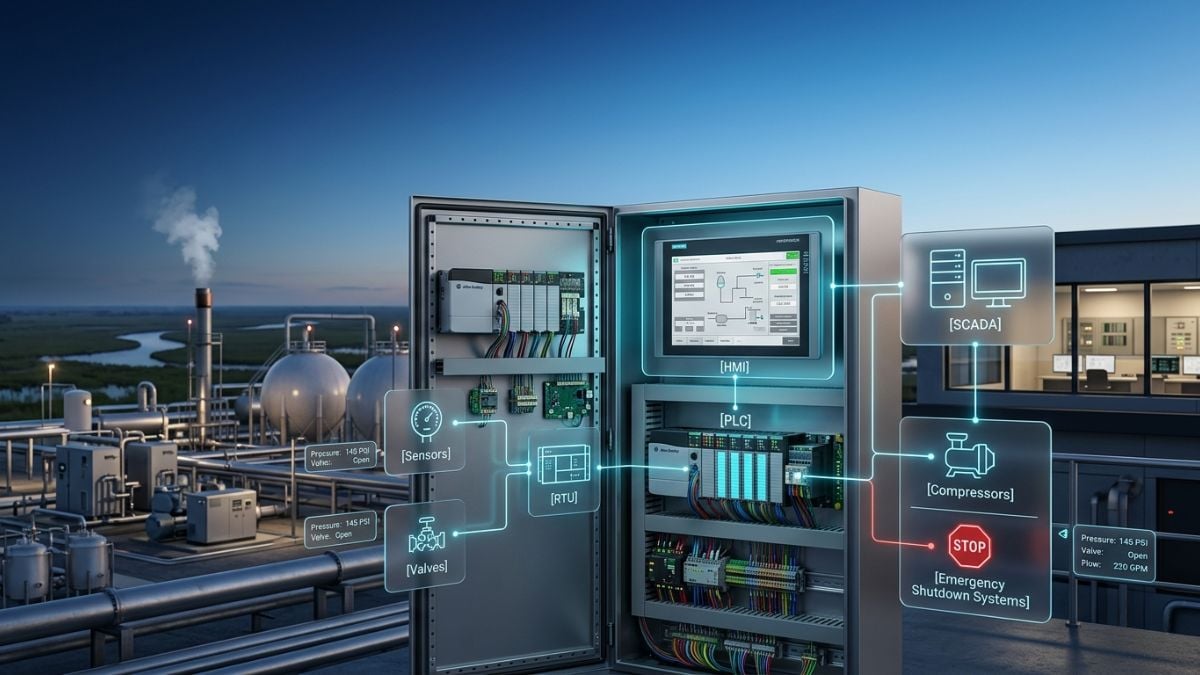
PLC programming for oil and gas facilities in Louisiana covers control logic development, code modification, and support for wellheads, compressors, separators, LACT units, and shutdown systems. Programmers work in Allen-Bradley and Siemens platforms, tie PLCs into SCADA and flow computers, and keep safety systems compliant. Costs depend on I/O count, logic complexity, and documentation quality.
Key Takeaways
- PLCs run nearly every automated process in Louisiana oil and gas, from wellhead shutdowns to custody transfer.
- Allen-Bradley dominates Gulf Coast facilities, while Siemens shows up most on packaged OEM equipment.
- Missing documentation and undocumented code changes are the biggest cost drivers in legacy PLC upgrades.
- Emergency shutdown logic must match approved cause-and-effect drawings, not tribal knowledge in someone’s head.
- Rockwell has announced end-of-life dates for the SLC 500 family, so migration planning cannot wait.
Your facility cannot produce a single barrel without working PLC logic behind it. Yet many Louisiana sites run on programs written 20 years ago by people long gone. When that logic fails, production stops, and nobody on site can explain why.
We have spent years inside these panels across the Gulf Coast. We have seen wellheads, gas plants, terminals, and refineries share the same core problems. The fix is disciplined programming, honest documentation, and a partner who knows the region’s equipment.
This guide explains what PLC programming work involves in oil and gas settings. You will learn the common applications, the major platforms, safety requirements, and cost drivers. By the end, you will know exactly what to ask a programming provider.
PLC Programming in Louisiana Oil & Gas Operations
A programmable logic controller, or PLC, is a hardened industrial computer. It reads sensor inputs, executes logic, and drives valves, motors, and alarms in milliseconds. In oil and gas, that logic decides when wells flow, when compressors load, and when everything shuts down. According to the U.S. Energy Information Administration, Louisiana ranks among the top natural gas-producing states and hosts roughly 15 operating refineries. That scale makes reliable PLC programming for oil and gas facilities in Louisiana a business-critical service, not a nice-to-have.
How PLCs Control Upstream, Midstream, and Downstream Processes
Upstream, PLCs manage wellhead pressure shutdowns, chemical injection, plunger lift cycles, and artificial lift equipment. Midstream, they control compression, pipeline block valves, gas dehydration, and processing plant units. Downstream, they run refinery utility systems, terminal loading racks, and blending operations.
The logic differs at each stage, but the discipline stays the same. Inputs must be validated, sequences must be interlocked, and failures must land in a safe state. A programmer who only knows one segment will miss hazards in the others.
Onshore vs. Offshore Control Requirements
Onshore sites in Louisiana are often remote, solar-powered, and connected by radio or cellular telemetry. Their PLC programs must tolerate lost communication and limited power. Offshore platforms face stricter rules under BSEE oversight and SEMS programs. Offshore shutdown logic typically follows API RP 14C safety analysis, with documented safe charts for every device.
Offshore work also adds space limits, salt corrosion, and expensive mobilization. Therefore, offshore code must be tested harder before anyone steps on a boat or helicopter.
Automation Challenges Across Louisiana’s Gulf Coast Facilities
Hurricane season is the obvious one. PLC programs need clean storm shutdown sequences and predictable black-start behavior after power returns. We have seen facilities lose days because restart logic was never written, only improvised.
Aging infrastructure creates the second challenge. Many panels still run PLC-5 or SLC 500 processors with no spare parts on site. Finally, the skilled labor market is tight. Experienced controls people retire faster than replacements arrive, which makes documentation and outside support more valuable every year. These pressures shape every application we cover next.
Common PLC Programming Applications in Oil & Gas
Most PLC programming in oil and gas falls into five application areas. Each one carries its own failure modes and its own regulatory weight.
Wellhead and Production Control
Wellhead PLCs and RTUs handle high and low pressure shutdowns, flowline monitoring, and pump control. For rod pumps and ESPs, logic manages start permissives, pump-off conditions, and restart timers. Plunger lift wells need cycle timing tuned to actual well behavior, not factory defaults. Bad plunger logic wastes gas and beats up downhole equipment.
Compressor and Pipeline Control
Reciprocating compressor packages rely on PLCs for start sequencing, load steps, and protective shutdowns. Vibration, high discharge temperature, and low suction pressure trips must respond fast and log cleanly. On pipelines, PLCs operate block valves, monitor pressures, and feed data to leak detection systems. Pipeline operators also answer to PHMSA control room management rules, so alarm rationalization matters here.
Separation and Tank Battery Automation
Three-phase separators need level control on oil, water, and interface layers. Dump valve logic must handle slugs without tripping the whole battery. Tank batteries add high-level shutdowns, vapor recovery control, and overfill protection. A stuck level float with no rate-of-change check in the logic is a classic spill scenario.
LACT, Metering, and Custody Transfer Automation
LACT units transfer ownership of crude, so their automation carries direct financial consequences. PLC logic coordinates the pump, divert valve, BS&W monitor, sampler, and meter proving connections. Sequences generally follow API MPMS measurement practices. A programming error here does not just cause downtime. It creates measurement disputes with your purchaser.
Emergency Shutdown and Process Safety Control
ESD systems are the last line of defense before an incident. Their logic must match approved cause-and-effect drawings exactly, with every bypass tracked and alarmed. Facilities covered by OSHA 1910.119 process safety management must also manage every logic change through MOC. Undocumented ESD changes are one of the most dangerous habits we find in the field. Which platform runs all this logic matters too, and that is next.
PLC Platforms Used in Oil & Gas Facilities
Two platform families cover most Louisiana oil and gas facilities: Allen-Bradley and Siemens. The table below compares them from a Gulf Coast perspective.
| Factor | Allen-Bradley (Rockwell) | Siemens |
| Common controllers | ControlLogix 5580, CompactLogix 5380, legacy SLC 500 and PLC-5 | S7-1500, S7-1200, legacy S7-300 and S7-400 |
| Programming software | Studio 5000, RSLogix 500 for legacy systems | TIA Portal, Step 7 Classic for legacy systems |
| Where you see it in Louisiana | Most production sites, gas plants, terminals, and pipelines | Packaged equipment, OEM skids, and some newer plants |
| Typical strengths | Deep local support base, familiar to most Gulf Coast technicians | Strong structured text tools, integrated safety controllers |
| Watch-outs | License costs, firmware and version mismatches | Fewer local spares and fewer trained technicians in the region |
Allen-Bradley ControlLogix, CompactLogix, and Studio 5000
Allen-Bradley is the regional default. ControlLogix handles large plants and redundant architectures, while CompactLogix fits skids and smaller sites. Studio 5000 is the current programming environment, with RSLogix 500 still needed for SLC-era systems. Version control matters here. Opening a project in the wrong firmware or software version creates real risk during live troubleshooting.
Siemens S7-1200, S7-1500, and TIA Portal
Siemens controllers arrive most often on packaged OEM equipment, such as compressor skids and treatment units. The S7-1500 line offers strong performance and integrated safety options through TIA Portal. The regional challenge is support depth. Fewer Gulf Coast technicians know TIA Portal well, so facilities need a partner fluent in both worlds.
Programming Languages: Ladder Logic, Structured Text, and Function Block
IEC 61131-3 defines the standard PLC languages. Ladder logic dominates oil and gas because operators and electricians can read it during a 2 a.m. callout. Structured text suits math-heavy tasks, such as flow calculations or PID enhancements. Function block works well for repeated device patterns, like identical valve or motor controls. Good programmers choose the language your site team can actually maintain.
What PLC Programming Work Involves
Professional PLC programming is far more than typing logic. The work spans design, coding, documentation, and controlled change.
New Program Development and Existing Code Modification
New development starts from a control narrative and ends with tested, commented code. Modification work is harder. The programmer must first understand undocumented logic written years ago, often with cryptic tag names. We always capture a verified backup before touching a single rung. Skipping that step has stranded more than one facility.
Control Logic, Sequence, and Cause-and-Effect Development
Sequences define how equipment starts, runs, and stops in order. Cause-and-effect matrices define what each abnormal condition must do to each device. Together they become the contract between engineering, operations, and the code. When the code drifts from the matrix, audits fail, and hazards hide.
Hardware and I/O Architecture Design
Architecture work covers processor selection, I/O counts, network layout, and panel design. Spare I/O capacity should be planned up front, because field changes always come. Hazardous area rules under NEC Article 500 shape what hardware can live where. Intrinsically safe barriers, purged panels, and rated enclosures all flow from that classification.
Control Narratives, Documentation, and Version Control
Every delivered program should include a control narrative, I/O list, and commented logic. Version control means dated program archives with change descriptions, stored off the plant floor. Ask any provider one question. Can they hand you the exact program running in your processor today? If not, documentation discipline is missing, and integration work becomes guesswork.
Integrating PLCs With Field Systems
A PLC never works alone in an oil and gas facility. Integration ties it to measurement, telemetry, and operator screens.
Flow Computer and Electronic Flow Measurement Integration
Gas measurement usually lives in dedicated flow computers, such as ABB Totalflow or Emerson units. PLCs exchange data with them over Modbus or Ethernet for control and reporting. The integration must keep custody data untouched while sharing values the logic needs. Mapping errors here quietly corrupt production reports for months.
RTU Integration for Remote and Offshore Assets
Remote well sites often pair a small PLC or RTU with radio or cellular telemetry. Logic must run autonomously when communication drops, then report cleanly when it returns. Store-and-forward data handling prevents gaps in production records. Offshore assets add satellite links, where bandwidth limits force careful polling design.
SCADA, HMI, and Instrumentation Connectivity
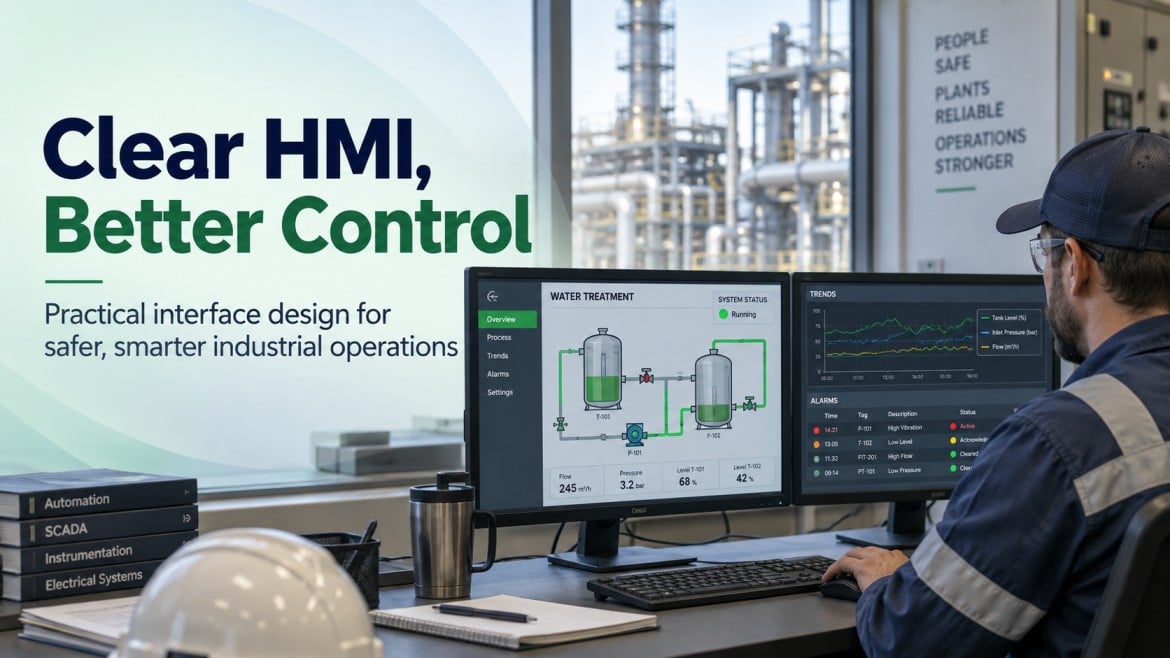
The PLC feeds local HMIs and the site-wide SCADA host. Platforms like FactoryTalk, Ignition, and VTScada all appear across Louisiana facilities. Below the PLC, 4-20 mA and HART instruments supply the raw signals. Scaling, filtering, and bad-signal handling in the PLC decide whether operators trust their screens. Our SCADA and facility automation services cover this full stack, from instrument to host. Everything above the instrument layer also needs protection, which brings us to safety and security.
Safety and Cybersecurity in Oil & Gas PLC Systems
Safety and security failures in PLC systems carry the highest consequences of any topic in this guide.
Fail-Safe Architectures, Redundancy, and Safety Interlocks
Fail-safe design means de-energize-to-trip. Loss of power or signal must drive equipment to its safe state. Critical facilities add redundant processors and power supplies so single failures do not stop production. Interlocks must live in logic, not only in operator procedures, and bypasses must be visible and time-limited.
Safety Instrumented Systems and Hazardous Area Considerations
Safety instrumented systems follow IEC 61511, with functions assigned SIL ratings from risk analysis. SIS logic often runs in dedicated safety controllers, separate from basic process control. Hazardous area classification then governs the field hardware. Class I, Division 1 and 2 boundaries under NEC Article 500 determine wiring methods and enclosure types. Programmers must respect both layers, because software cannot fix a misapplied installation.
ICS Cybersecurity, Secure Remote Access, and Program Backup
CISA regularly publishes ICS advisories that affect Rockwell and Siemens products. That alone justifies network segmentation between control and business systems. Remote access should pass through a VPN and monitored jump host, never a direct connection. In addition, every processor needs scheduled, verified program backups stored off-site. Most importantly, test a restore before you need one.
Testing, Commissioning, and Ongoing Support
Testing is where programming quality becomes visible. Skipped testing always resurfaces during startup, at the worst possible time.
Logic Simulation, Factory Acceptance Testing, and I/O Validation
Simulation lets logic run against modeled inputs before hardware exists. Factory acceptance testing then proves the assembled panel against the control narrative, witnessed by the client. On-site, point-to-point I/O checks confirm every wire lands where drawings claim. Facilities that skip formal FAT usually pay for it in extended commissioning.
On-Site Commissioning and Startup
Commissioning walks the facility from dead panel to stable production. Loop checks, interlock trips, and sequence tests happen with operations present. First startup should follow a written plan with hold points, not enthusiasm. A disciplined startup takes hours. An undisciplined one can take weeks.
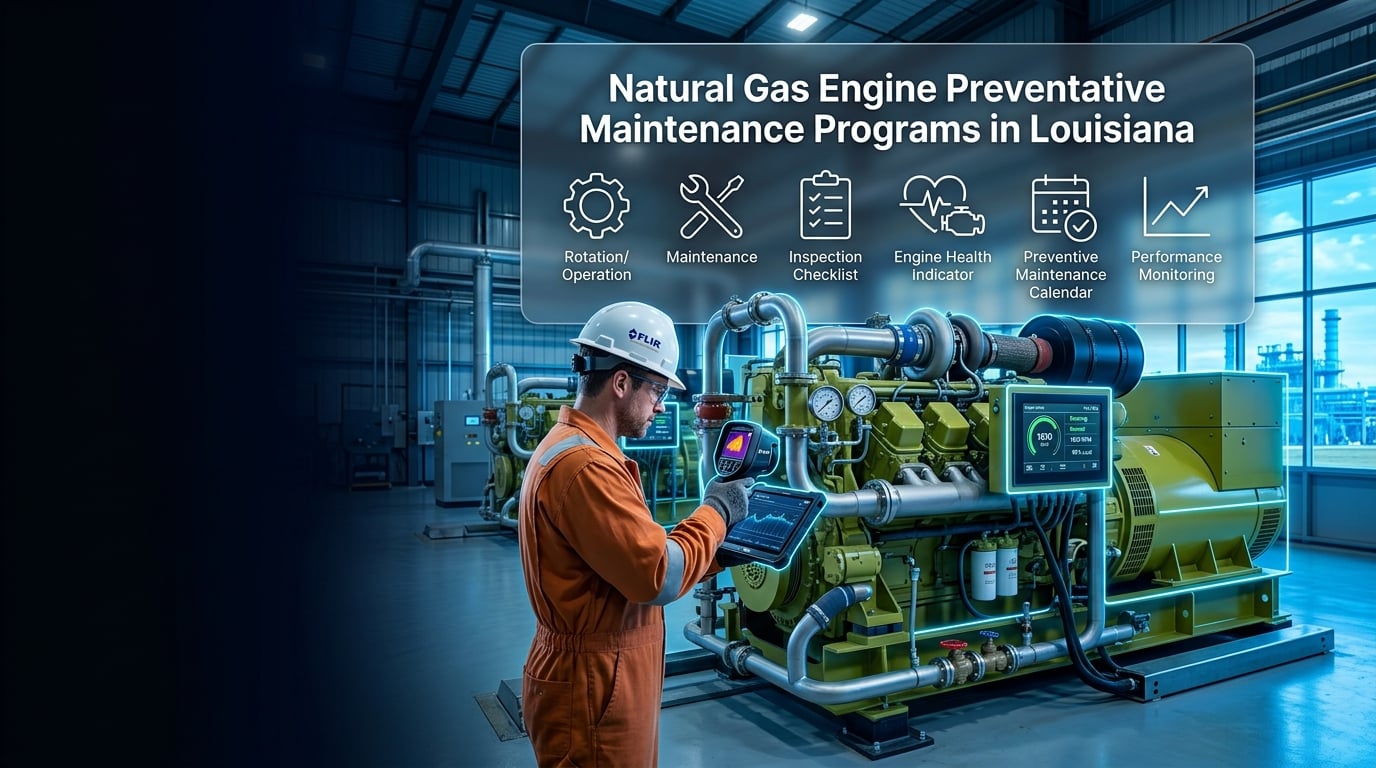
Fault Diagnosis, Health Checks, and Preventive Maintenance
When faults appear, online monitoring of live logic finds root causes fast. Periodic health checks review processor loading, battery status, communication errors, and alarm floods. Preventive items include firmware reviews, backup verification, and spare parts audits. Small findings caught early prevent the 3 a.m. phone call later.
On-Site and Remote Technical Support
Remote support resolves many issues within the hour through secure access. On-site support still matters for hardware failures, wiring faults, and hands-on troubleshooting. The right mix depends on your site’s connectivity and criticality. Response time commitments should be written into any support agreement, not assumed.
Modernizing Legacy PLC Systems in Aging Facilities
Legacy migration is the single most requested PLC service across Louisiana right now. Rockwell has announced end-of-life timelines for the SLC 500 family, and PLC-5 support ended years ago.
Legacy System Assessment and Obsolete Hardware Replacement
Assessment starts with an honest inventory. Processors, I/O cards, firmware versions, network hardware, and software licenses all get documented. Then comes the harder question. Does the running program match any saved copy? In many facilities it does not, so the live program must be uploaded and reverse engineered. Only then can replacement hardware be selected with confidence.
Platform Migration Without Unnecessary Downtime
Conversion tools translate old logic into modern platforms, but they only start the job. Converted code needs cleanup, restructuring, and full retesting. Downtime strategy decides the schedule. Some sites migrate during planned turnarounds, while others use phased cutovers with wiring conversion kits. For example, swing panels let crews pre-wire new I/O and cut over one section per shutdown window. The goal is simple. Modern hardware, proven logic, and production impact measured in hours, not days.
Louisiana Oil & Gas Facilities That Rely on PLC Automation
Nearly every hydrocarbon facility type in Louisiana depends on PLC automation daily.
Production, Wellhead, and Gas Processing Facilities
Production sites use PLCs for well control, separation, and compression, often across dozens of remote locations. Gas processing plants add amine treating, dehydration, and NGL recovery units. Each unit brings its own sequences, interlocks, and alarm philosophy.
Refineries, Petrochemical, and Pipeline Facilities
Refineries and petrochemical plants along the Mississippi River corridor run DCS platforms for core process units. PLCs still handle utilities, packaged equipment, water treatment, and safety functions around them. Pipeline systems depend on PLCs at pump stations, compressor stations, and valve sites, all reporting to central SCADA.
Tank Farms, Terminals, and Offshore Facilities
Tank farms and marine terminals automate loading racks, transfer pumps, and overfill protection. Custody measurement makes accuracy a financial issue, not just an operational one. Offshore platforms and their shore bases round out the picture, with safety systems built to API RP 14C practices.
Service Coverage Across Lafayette, Baton Rouge, Lake Charles, New Orleans, and the Gulf Coast
Advanced Energy Services supports facilities across Lafayette, Baton Rouge, Lake Charles, New Orleans, and the wider Gulf Coast. Regional presence matters when a processor faults during a storm watch. A programmer three states away cannot stand in front of your panel today. So what should you expect a project like this to cost?
What Affects PLC Programming Project Costs
No honest provider quotes PLC programming without understanding the specific system. These are the variables that move the number.
Factors That Determine Programming Costs
Eight factors drive most PLC programming project costs:
- I/O count, which sets the base scale of the program and testing effort.
- Logic complexity, from simple pump control to multi-unit sequencing with interlocks.
- Documentation quality, since missing narratives force reverse engineering at hourly rates.
- Platform and licensing, including software versions and any required hardware.
- Integration scope across SCADA, flow computers, RTUs, and third-party packages.
- Testing requirements, especially witnessed FAT and formal SIS validation.
- Site access and travel, including offshore mobilization and safety training requirements.
- Downtime windows, because phased or after-hours cutovers add engineering and labor.
New Systems vs. Legacy Upgrades
New systems are usually easier to estimate. The scope starts clean, with a defined narrative and known hardware. Legacy upgrades carry discovery risk. Undocumented changes, dead code, and mystery wiring only appear once work begins. As a result, experienced providers build assessment phases into legacy projects to protect both sides.
Getting an Accurate Project Estimate
You can tighten any estimate by gathering a few items first. Collect current program files, I/O lists, panel photos, and any control narratives. Note your acceptable downtime windows and your safety system boundaries. With that package, a qualified provider can scope the work in days, not weeks.
Frequently Asked Questions
How long does a PLC programming project take?
Small logic modifications often take days, while full system programming takes weeks to months. A single wellsite panel may need one to two weeks, including testing. A plant-wide migration can run several months across phased cutovers. Documentation quality and downtime windows influence the schedule more than raw code size.
Can existing PLC code be modified without full replacement?
Yes, most running PLC programs can be modified safely without replacement. The programmer uploads the live program, verifies a backup, and documents current behavior first. Changes are then made, tested, and archived under change management. Full replacement only becomes necessary when hardware is obsolete or code is beyond recovery.
What is the difference between PLC and SCADA in oil & gas facilities?
A PLC controls equipment locally, while SCADA monitors and supervises many PLCs from a central location. The PLC executes logic in milliseconds at the facility. SCADA collects that data, displays it to operators, stores history, and sends alarms. They work together, with the PLC acting even when SCADA communication fails.
How often should PLC programs be backed up?
Back up PLC programs after every change and on a fixed schedule, at least quarterly. Store copies off the plant floor, ideally in a versioned repository with change notes. Verify backups by comparing them against the running processor. Many facilities discover missing or stale backups only after a processor fails.
What certifications should a PLC programming provider have?
Look for Louisiana electrical licensing, safety council credentials, and documented platform experience. Relevant signals include Rockwell and Siemens training, ISA certifications, and TWIC cards for terminal access. For safety work, ask about IEC 61511 experience and functional safety training. Verifiable project references in oil and gas matter more than any single certificate.
Get PLC Programming Support for Your Louisiana Facility
Reliable control logic decides whether your facility produces or sits idle. This guide covered the applications, platforms, safety requirements, and cost drivers behind PLC programming for oil and gas facilities in Louisiana. The pattern is consistent across every site type. Disciplined programming, tested logic, and honest documentation protect both production and people.
The risks of waiting are just as consistent. Obsolete processors lose support, undocumented changes accumulate, and experienced personnel retire. Every hurricane season tests shutdown and restart logic that may never have been reviewed. Facilities that address these gaps now avoid paying for them during an outage.
Advanced Energy Services delivers PLC programming, SCADA integration, and I&E support across Louisiana and the Gulf Coast. We work in Allen-Bradley and Siemens platforms, from single wellsite panels to plant-wide migrations. Contact us today for a programming consultation or a project estimate for your facility.